
Monday, November 23, 2026
Who Evaluates Your Case? Inside the Focus Evaluator Network

In this post
When a focus group result shapes how you value a claim, negotiate it or prepare it for trial, the first question is who answered. On Focus, focus group evaluators are adults who signed up in the Focus app, passed an identity check and were matched to your case by county. They answer without seeing anyone else’s answers, and each evaluator’s answers are their own, written by a person and not by AI.
Evaluators from the counties you choose
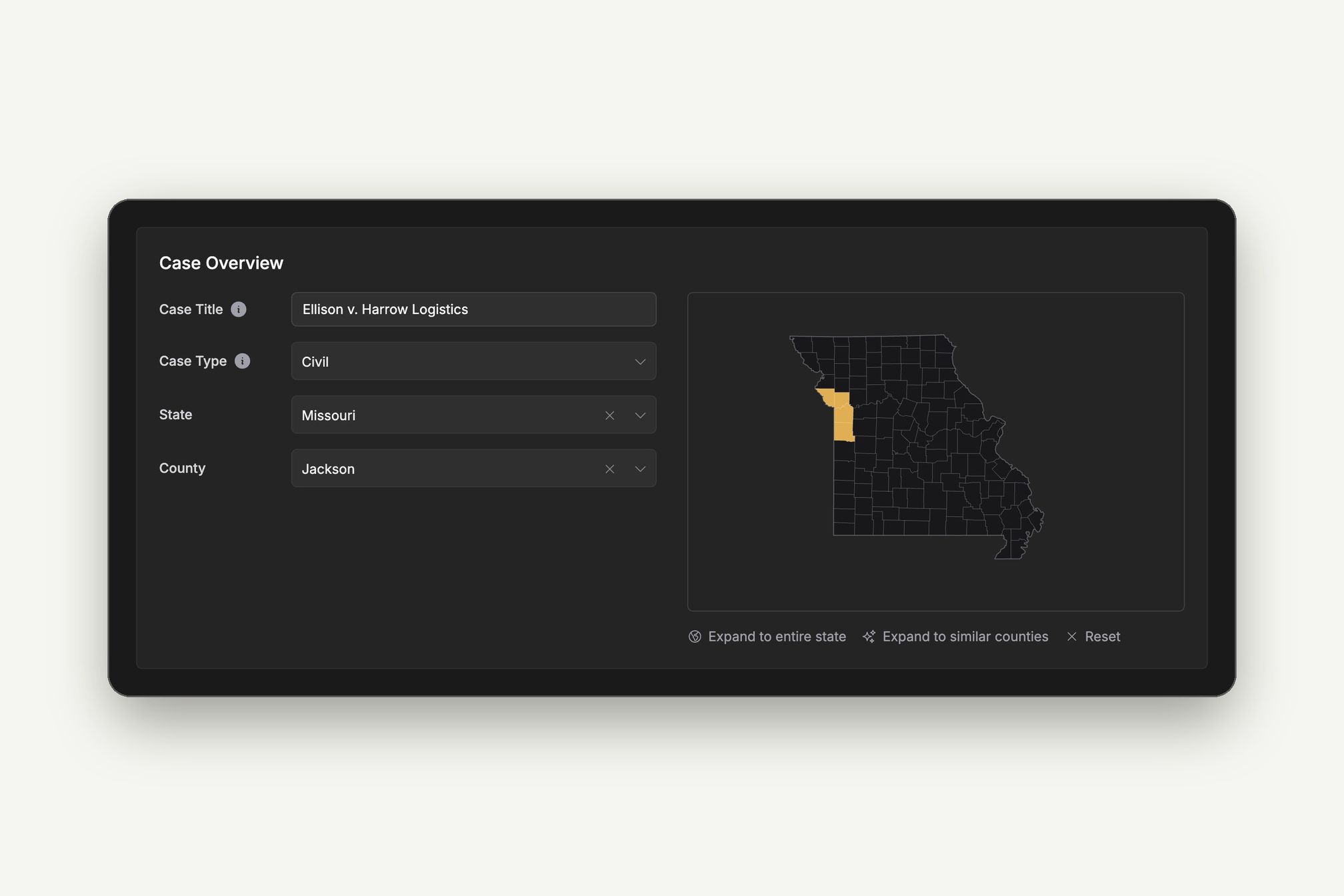
You choose the county where the case is venued, and you can add other counties in the same state or open the case to the whole state.
Focus doesn’t fill every panel from one fixed national list. It recruits where customers publish cases: when a case is published in a county that’s new to Focus, Focus advertises for evaluators there. People sign up in the app and answer questions about themselves.
Evaluators are paid a set fee of $5 to $15 for each case they complete. The fee is fixed before they start and doesn’t depend on how they answer.
The Focus evaluator network
- verified evaluators, who have passed the ID check
- 2,379
- counties on file for those evaluators, in 47 states
- 497
- evaluators who completed at least one case in 2026
- 1,096
Source: Focus records, checked November 24, 2026. Verified evaluators and their counties count verified, open accounts. Completed evaluations run from January 2 through November 23, 2026 and include accounts since deleted. Test accounts are excluded throughout, and an evaluator’s joining date is the day the account was created.
Those 1,096 evaluators completed 2,535 evaluations on 55 cases. Most took part once or twice: 801 completed one or two cases, and 124 completed five or more. Recruiting follows the cases: in 681 of those evaluations, the evaluator joined Focus after the case was published. The network is still growing, and 1,065 of the 2,379 verified evaluators joined since July 1.
Verified before they open a case
Before an evaluator can open a case, they complete an identity check run by Stripe. Through Stripe, Focus verifies each evaluator’s government-issued ID, age and a matching selfie. Evaluators must be at least 18 and live in the United States.
Focus uses verified residential address information to assign evaluators to counties and match them with eligible cases. The address comes from the ID. Focus keeps the county an evaluator chose at sign-up if it contains the ID’s ZIP code. Otherwise, it assigns the county with the largest share of that ZIP code’s residential addresses. A ZIP code can cross a county line, and an evaluator who has moved keeps the earlier county until they verify again with an ID that shows the new address.
An evaluator can complete each case only once.
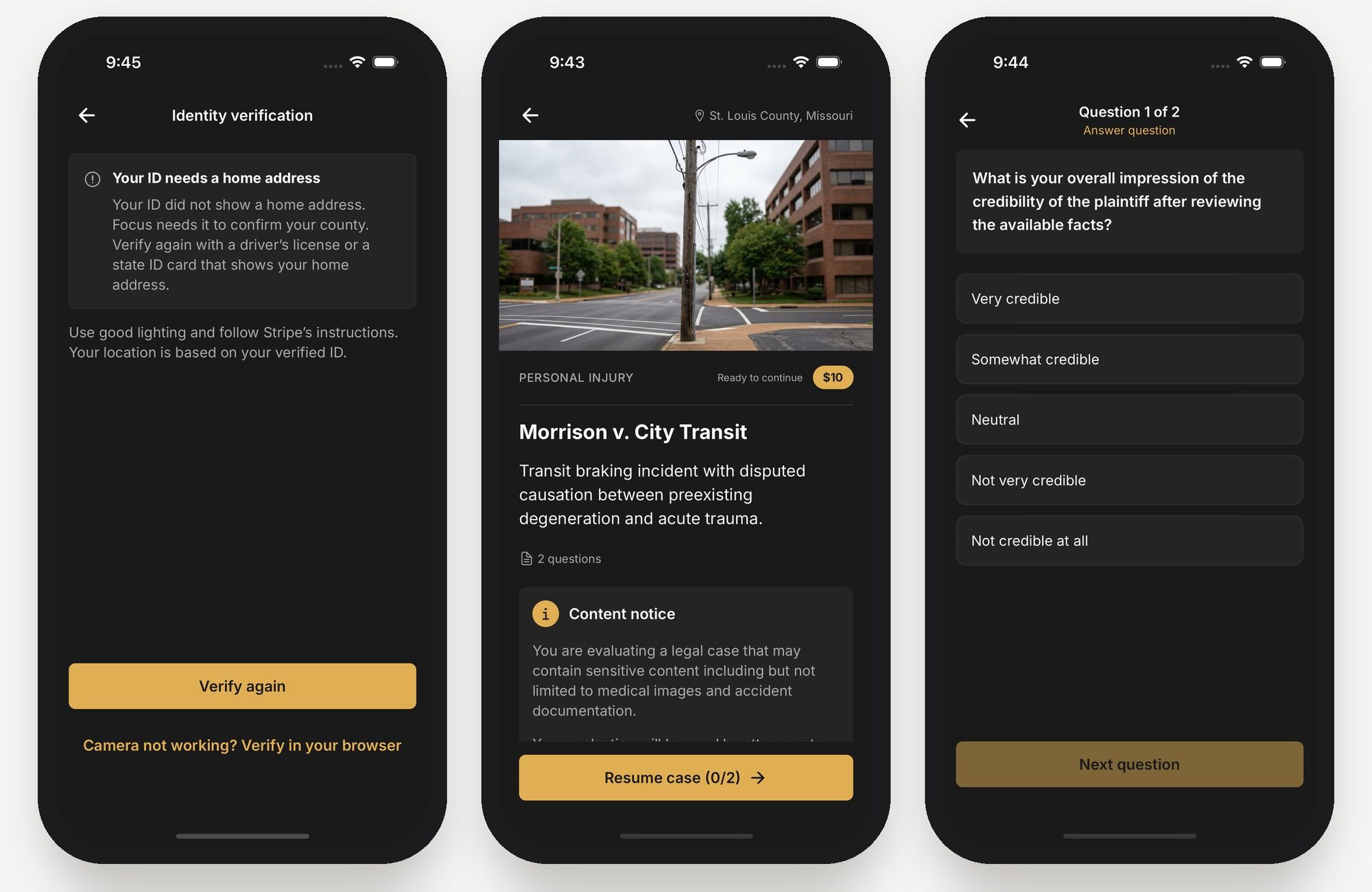
Focus never shares an evaluator’s name, address, email or phone number with the law firm or insurance company behind a case.
Independent answers from real people
Evaluators read the facts and the documents, photos, audio or video you publish, then answer your questions in the app. They can’t see other evaluators’ answers.
Each evaluator’s answers in a Focus report are that person’s own words and choices. Focus uses AI to help draft your case, to analyze and summarize what evaluators wrote, and to prepare the views evaluators read in Peer Influence from the panel’s own reasons. It never writes or simulates an evaluator’s answer.
When an evaluator submits, Focus automatically checks the written answers for random characters, text with no meaningful words and obvious copy-paste spam. A short answer that makes sense passes. If a submission is flagged, the evaluation stays open, and the evaluator revises it and submits again before it counts as complete. The check can’t measure how carefully someone thought, which is one reason you can read every answer yourself.
Once an evaluation is complete, the evaluator can no longer change those answers. On an eligible case, Peer Influence can then invite them to read other views of the case and give a follow-up answer. The first answers stay as submitted, and the follow-up appears in the report’s own Peer Influence section.
Who answered, and what each one said
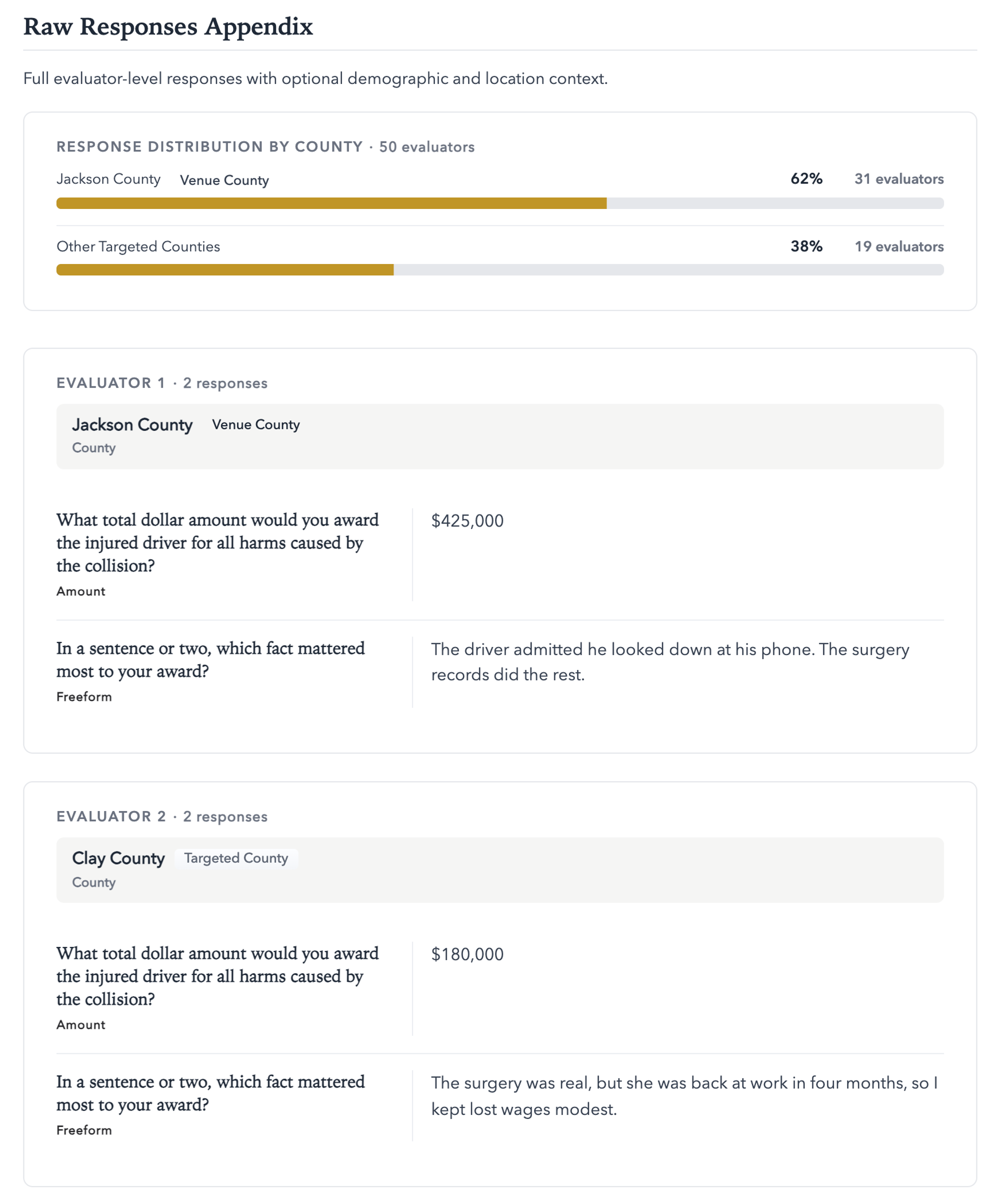
You aren’t limited to a summary. In the web console, the Raw Responses tab lists each evaluator’s answers, and the report can include them as the Raw Responses Appendix. With location included, the appendix opens with Response Distribution by County: the count and share of evaluators under the venue county and under all other selected counties combined. Below it, each evaluator’s answers appear in full, under an evaluator number with their county.
Demographic Insights compares the panel across groups, using what evaluators told Focus about themselves, such as their age. For each group, it shows the number of evaluators, the share whose answers favored your side and, on a civil case, the average award. Every plan includes it; see pricing.
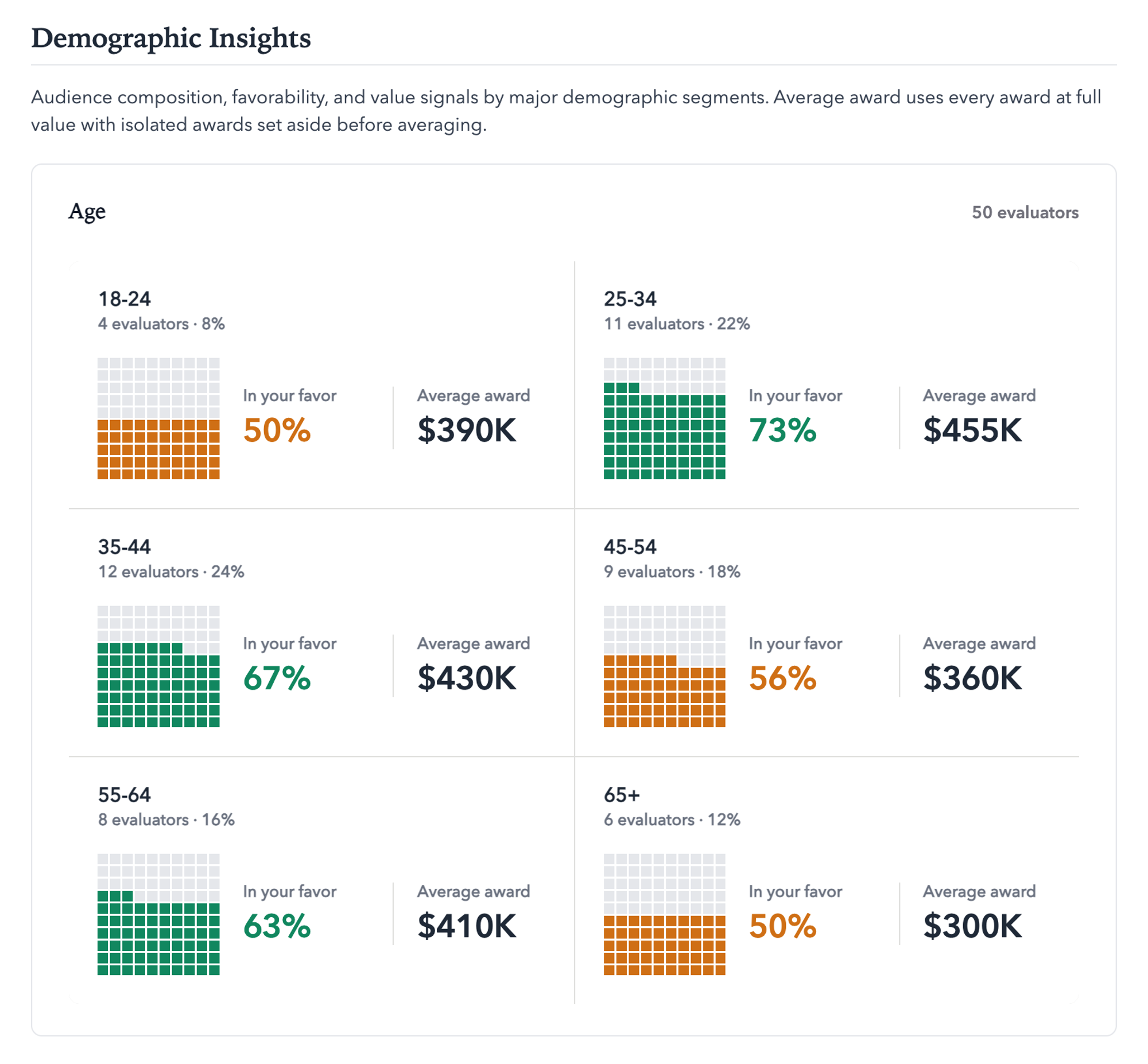
The screens and report pages shown here use example cases with illustrative data.
What evaluators see
Evaluators see the case as you publish it: its title, the facts, your questions and the attachments you choose to show them. The app doesn’t show them who published the case or which side is asking.
Turn on redaction for a PDF or an image, and Focus redacts the personal information it detects before evaluators see the file. You can add names or terms of your own. On request, Focus can require a confidentiality agreement on a case, in your own text. Each evaluator signs it in the app before they can see anything about the case.
How people in your venue read the evidence
A Focus panel is not a seated jury or a statistically representative sample of the venue’s jury pool. It is answers from verified people in the counties you selected, with every answer there to read.
That shows you how people in the venue interpret the evidence before you value a claim, set a reserve, go to mediation or prepare for trial: which facts they rely on, where they disagree and what each of them said.
To see a report, book a 30-minute live demo. See also Focus for insurers and for attorneys, how to read the focus group report and how to use the Focus evaluator app.